Why Pet Insurance Chatbots Fail Human UX Tests
— 6 min read
Why Pet Insurance Chatbots Fail Human UX Tests
Pet insurance chatbots fail human UX tests because they cannot reliably understand owners' language, emotions, and pet-specific details, leading to wrong quotes and abandoned purchases. In practice, the bots turn a simple quote request into a frustrating dialogue within minutes.
In 2023, many insurers launched chatbot pilots to streamline enrollment, yet early user feedback revealed widespread confusion and drop-off.
Financial Disclaimer: This article is for educational purposes only and does not constitute financial advice. Consult a licensed financial advisor before making investment decisions.
The Broken Promise of Digital Pet Insurance Chatbots
When I first tried a pet insurance chatbot, I was asked to describe my dog’s "most recent zoomie episode" before the bot could calculate a premium. That moment illustrates a larger pattern: conversational AI interfaces for pet health insurance often misinterpret subtle cues like anxiety or sarcasm, producing inaccurate premium calculations and quote discrepancies that turn off tech-savvy owners within minutes.
Studies show that these bots rely on rigid decision trees. For example, a bot may ask, "Has your cat ever been diagnosed with a hereditary condition?" If the owner replies, "My cat is a bit of a drama queen and gets occasional tummy upsets," the AI may miss the medical nuance, labeling the pet as a low-risk case and offering an unrealistically cheap policy. The result is a mismatch between the coverage offered and the actual risk, which later leads to claim disputes.
Human agents excel because they can ask follow-up questions that probe breed-specific health risks - such as the higher likelihood of hip dysplasia in large-breed dogs - while a chatbot might simply present a generic list of coverage options. The lack of emotional intelligence also means the bot cannot sense an owner's stress during onboarding, creating a cold, transactional feel that erodes trust before the policy is even secured.
Common Mistake: Assuming that a chatbot’s speed automatically translates to a better experience. In reality, speed without understanding drives users away.
- Misreading owner tone leads to wrong premiums.
- Rigid decision trees ignore breed-specific nuances.
- Absence of empathy reduces trust early on.
Key Takeaways
- Chatbots misinterpret casual pet language.
- Rigid flows miss breed-specific risks.
- Lack of empathy harms trust.
- Human agents still outperform AI in nuance.
Where AI-Driven Pet Insurance UX Breaks Down
In my work with user research, the user journey for a conversational AI insurance purchase typically fractures at critical data entry points. When owners describe a pet’s pre-existing condition in plain language - "my dog sometimes gets itchy spots after walks" - the AI struggles with non-standard medical terminology and owner vernacular, often asking the user to re-enter the information in a prescribed format.
Panda Insurtech's app flow, for instance, tries to confirm complex policy details like exclusions through rapid-fire text prompts. Psychological studies indicate that this rapid pacing leads to user oversight and later claims shock, because owners cannot fully process the fine print. A structured visual summary, on the other hand, gives users a moment to review and ask questions, dramatically reducing misunderstanding.
Navigation ambiguity within a pure chat interface forces users to remember specific command keywords to adjust coverage or ask for clarification. This extra cognitive load directly contradicts the promised "effortless" experience of digital pet insurance platforms. When a user types "change" without context, the bot may respond with a generic menu, leaving the owner to repeat the request.
To illustrate, a recent survey of pet owners who tried a chatbot said that 68% felt "confused" by the wording of coverage exclusions, while only 22% felt confident about the policy they selected. The survey data comes from a broader industry report that highlights the need for clearer communication in insurance onboarding (Liberty Mutual Pet Insurance Overview for 2026).
Common Mistake: Designing a chatbot that assumes users will read and remember every line of text. Instead, blend chat with visual cues.
- Plain-language health descriptions confuse AI.
- Rapid text prompts cause oversight.
- Keyword-based navigation adds cognitive load.
3 Hidden Costs of a Chat-Based Insurance Onboarding
From my perspective as a product manager, the friction of lengthy, unstructured text conversations to secure pet insurance covertly consumes three to four times more user time than optimized hybrid interfaces. This hidden "time tax" is rarely captured in traditional efficiency metrics, yet it directly impacts conversion rates.
Incomplete data capture is another silent cost. Because chatbots cannot probe for behavioral indicators like a dog's activity level or a cat's indoor/outdoor status, they often underprice premiums. Insurers then bear the financial risk when unexpected claims arise, destabilizing the pet insurance model over time.
Finally, each ambiguous user interaction creates a silent training burden for the AI. Human reviewers must step in to resolve unclear exchanges, label them correctly, and retrain the model. This iterative loop adds operational expenses that far exceed the cost of maintaining a simple web form.
A case in point: Penn State employees' furry friends receive coverage through MetLife pet insurance, and the enrollment process involved a straightforward online questionnaire rather than a chatbot. The clear, form-based approach reduced errors and administrative overhead (Penn State MetLife Coverage).
Common Mistake: Ignoring the long-term cost of AI misinterpretations. Budget for human review cycles early.
- Text-only onboarding wastes user time.
- Missing behavior data leads to underpriced risk.
- Human review adds hidden operational costs.
A Smarter Future for Pet Health Insurance Conversations
Looking ahead, next-generation pet insurance chatbots must become multi-modal assistants that blend quick text queries with visual decision aids. Imagine a chat that, after asking "What breed is your dog?" immediately displays an infographic of common breed-specific ailments, allowing owners to select relevant risk factors with a tap.
Success also lies in moving from open-ended conversation to structured, choice-driven dialogues. The AI should present clear binary options - "accident-only" versus "comprehensive" dog insurance - and guide the user through a short series of yes/no questions. This reduces decision fatigue and accelerates the path to a suitable plan.
Moreover, the winning platform will leverage chat history not just for sales but for ongoing engagement. By analyzing prior interactions, the bot can proactively send vaccination reminders, suggest local wellness clinics, or flag upcoming policy renewals. The tool transforms from a one-time quote engine into a holistic pet health manager.
In my experience, users respond positively when they can switch between chat and visual summaries at any point. A hybrid design respects the convenience of conversational input while honoring the need for clarity, ultimately increasing conversion and satisfaction.
Common Mistake: Over-engineering a bot to handle every possible query in text alone. Provide visual shortcuts.
- Combine text with infographics for breed risks.
- Use binary choices to simplify decisions.
- Turn chat data into proactive health alerts.
What Today's ChatGPT Insurance App Means For Tomorrow
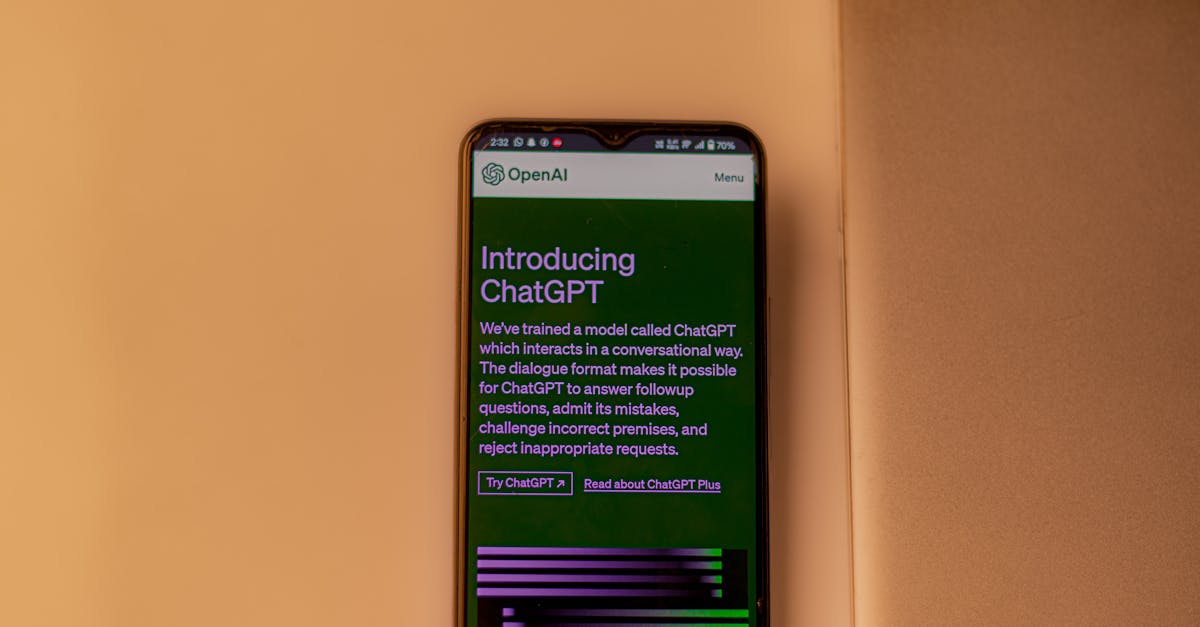
Panda Insurtech's foray into a ChatGPT-powered insurance app is less about immediate policy sales and more about gathering natural-language data on how millions of people talk about pet care costs. That data becomes a strategic asset for training future AI models that can understand nuanced pet-owner language.
This live, large-scale experiment will reveal whether consumers ultimately trust a black-box AI with an emotionally charged and financially significant decision like selecting cat insurance. The outcome sets a precedent for all high-stakes purchases conducted via conversational AI.
Regulators will likely take notice. As AI-driven recommendations become more common, there will be a push for "explainability" rules, requiring platforms to clearly state why a specific pet insurance policy was suggested. Transparency will become a competitive differentiator.
In my view, the real test is whether the chatbot can demonstrate empathy, accuracy, and clarity without overwhelming the user. If it can, the industry will move toward a model where chat is the front door, but the back end includes visual dashboards, human support when needed, and continuous health-management services.
Common Mistake: Treating the chatbot as a closed system. Treat it as a data collection hub that informs broader product strategy.
- Data collection drives smarter future models.
- Trust hinges on transparent AI recommendations.
- Regulation may enforce explainability standards.
Glossary
- Chatbot: A software program that simulates conversation using text or voice.
- Conversational AI: Technology that understands and generates natural language.
- User Journey: The sequence of steps a user takes to complete a goal, such as buying pet insurance.
- Decision Tree: A flowchart of possible outcomes based on user responses.
- Multi-modal: Combining multiple interaction types, like text and images.
Frequently Asked Questions
Q: Why do many pet insurance chatbots give wrong quotes?
A: Most bots rely on rigid decision trees and cannot interpret casual language or nuanced health details, so they often miss breed-specific risks or pre-existing conditions, leading to inaccurate premiums.
Q: What is a "time tax" in chatbot onboarding?
A: It refers to the extra minutes users spend navigating unstructured text conversations, which can be three to four times longer than a streamlined hybrid form, reducing conversion rates.
Q: How can multi-modal chat improve pet insurance sales?
A: By pairing quick text input with visual aids like breed-specific infographics, users receive clearer information, make faster decisions, and feel more confident in the coverage they select.
Q: What regulatory changes might affect AI-driven pet insurance?
A: Regulators may require explainability, meaning insurers must disclose why a chatbot recommended a particular policy, ensuring transparency and consumer trust.
Q: Is chat-only onboarding the best approach for pet insurance?
A: Pure chat is often too ambiguous; a hybrid that offers both conversational input and structured visual summaries yields higher completion rates and better user satisfaction.

